
Is My Child’s Bite Getting Worse? Signs You Shouldn’t Ignore This Spring

If your child’s teeth suddenly look more crowded, or their overbite seems larger than before, you’re not imagining things.
Bite problems in children can worsen as they grow, especially during growth spurts when the jaws develop quickly. The good news is orthodontists can often guide jaw growth and correct developing bite issues while children are still growing, which is why early evaluation is so important.
For many families in Wichita and Andover, an orthodontic consultation helps determine whether a child’s bite is developing normally or if early treatment may help prevent more complex problems later.
Can Children Grow Out of Crooked Teeth?
One of the most common questions parents ask is:
“Will my child grow out of crooked teeth?”
In most cases, the answer is no.
Once teeth begin to crowd and overlap, the condition rarely corrects itself naturally. When teeth shift past each other and lose their proper contact points, crowding typically becomes progressively worse over time.
Crooked teeth can also create additional oral health challenges, including:
Difficulty brushing and flossing effectively
Higher risk of cavities
Increased plaque buildup
Gum irritation or inflammation
This is why orthodontists often recommend early orthodontic evaluations to monitor developing bite problems. Learn more about treatment options.
Growth plays a major role in how teeth and jaws develop.
Some orthodontic issues actually become more noticeable during childhood growth spurts, especially between ages 7–12 when permanent teeth begin emerging.
Bite problems often occur because the upper and lower jaws grow at different rates or in different directions.
Expert Insight: How Jaw Growth Affects Bite Problems
Orthodontists know that jaw development and bite alignment go hand in hand.
For example:
Large overbites are often associated with smaller lower jaws or narrow upper jaws.
Underbites frequently occur when the upper jaw does not grow forward enough compared to the lower jaw.
Open bites can be related to excessive vertical jaw growth.
Because jaw growth continues throughout childhood and adolescence, orthodontists can sometimes guide growth patterns while a child is still developing. Once growth stops, treatment options may become more limited.
This is why early orthodontic evaluations can be so valuable.
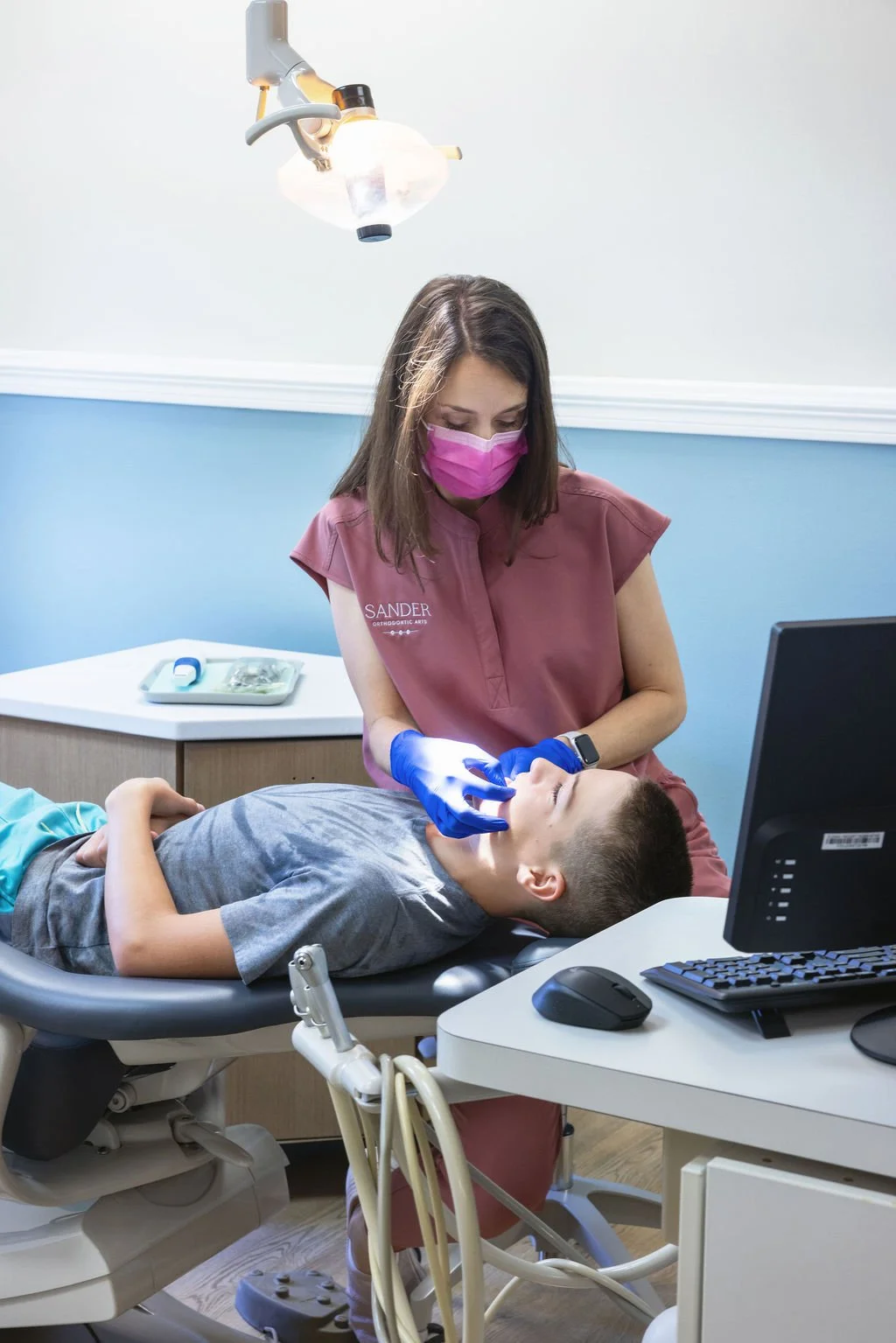
Signs Your Child May Need Braces
Every child’s smile develops differently, but there are several common signs that may indicate orthodontic treatment could be beneficial.
Parents should watch for the following bite problems in children.
1. Crowded or Crooked Teeth
Crowding happens when the jaw does not have enough space for teeth to align properly.
Common signs include:
Teeth overlapping each other
Teeth rotating or twisting
Teeth erupting outside the normal arch
Crowding rarely resolves on its own and often becomes more severe as additional permanent teeth come in.
2. Excess Space Between Teeth
While crowding is common, too much space between teeth can also signal orthodontic concerns.
Spacing may occur when:
Teeth are smaller than the jaw size
Certain teeth are missing
Jaw development is uneven
Orthodontic treatment can help guide teeth into a healthier alignment.
3. An Increasing Overbite (Overjet)
Many parents use the term overbite, but orthodontists often call this overjet.
This refers to an excessive horizontal gap between the upper front teeth and the lower front teeth.
Signs include:
Upper teeth protruding noticeably forward
Difficulty closing lips comfortably
Teeth appearing prominent in profile
Overjets can worsen during growth if the lower jaw develops more slowly than the upper jaw.

4. Underbite
An underbite occurs when the lower front teeth sit in front of the upper front teeth when biting down.
This may indicate that:
The lower jaw is growing more forward than the upper jaw
The upper jaw is not developing enough to match the lower
Underbites often benefit from early orthodontic guidance while the jaw is still growing.
5. Crossbite
A crossbite occurs when the upper back teeth sit inside the lower back teeth instead of outside them.
This condition can lead to:
Uneven jaw growth
Jaw shifting when chewing
Tooth wear
Early orthodontic treatment can sometimes help expand the upper jaw to correct this issue.
6. Narrow Upper Jaw (Narrow Palate)
Some children have an upper jaw that is too narrow relative to the lower jaw.
Signs can include:
Crowded upper teeth
Crossbites
Difficulty breathing through the nose
Orthodontists may be able to widen the upper jaw while the child is still growing.

7. Open Bite
An open bite occurs when the upper and lower front teeth do not touch when the mouth is closed.
Instead, a gap remains where the tongue may push forward.
This condition may be related to:
Growth patterns
Thumb sucking habits
Tongue posture
Orthodontic treatment can help guide teeth into proper contact.
8. Deep Bite
A deep bite occurs when the upper teeth cover most or all of the lower front teeth when biting down.
Sometimes the lower teeth may barely be visible.
Deep bites can contribute to:
Tooth wear
Gum irritation
Bite imbalance
Orthodontic care can help restore healthier alignment.
9. Baby Teeth That Don’t Fall Out
Sometimes baby teeth remain longer than expected.
When this happens, they can:
Block permanent teeth from erupting properly
Cause crowding
Alter the developing bite
Orthodontists monitor tooth eruption patterns carefully during childhood.

When Wichita Parents Should Schedule an Orthodontic Evaluation
Many parents in Wichita and Andover begin noticing orthodontic concerns between ages 7 and 10, when permanent teeth begin emerging and jaw growth accelerates.
An early orthodontic evaluation allows specialists to:
Monitor jaw development
Identify bite problems early
Determine whether early treatment could help guide growth
At Sander Orthodontic Arts, orthodontic evaluations help families understand their child’s smile development and determine the best timing for treatment. Book a consultation now.