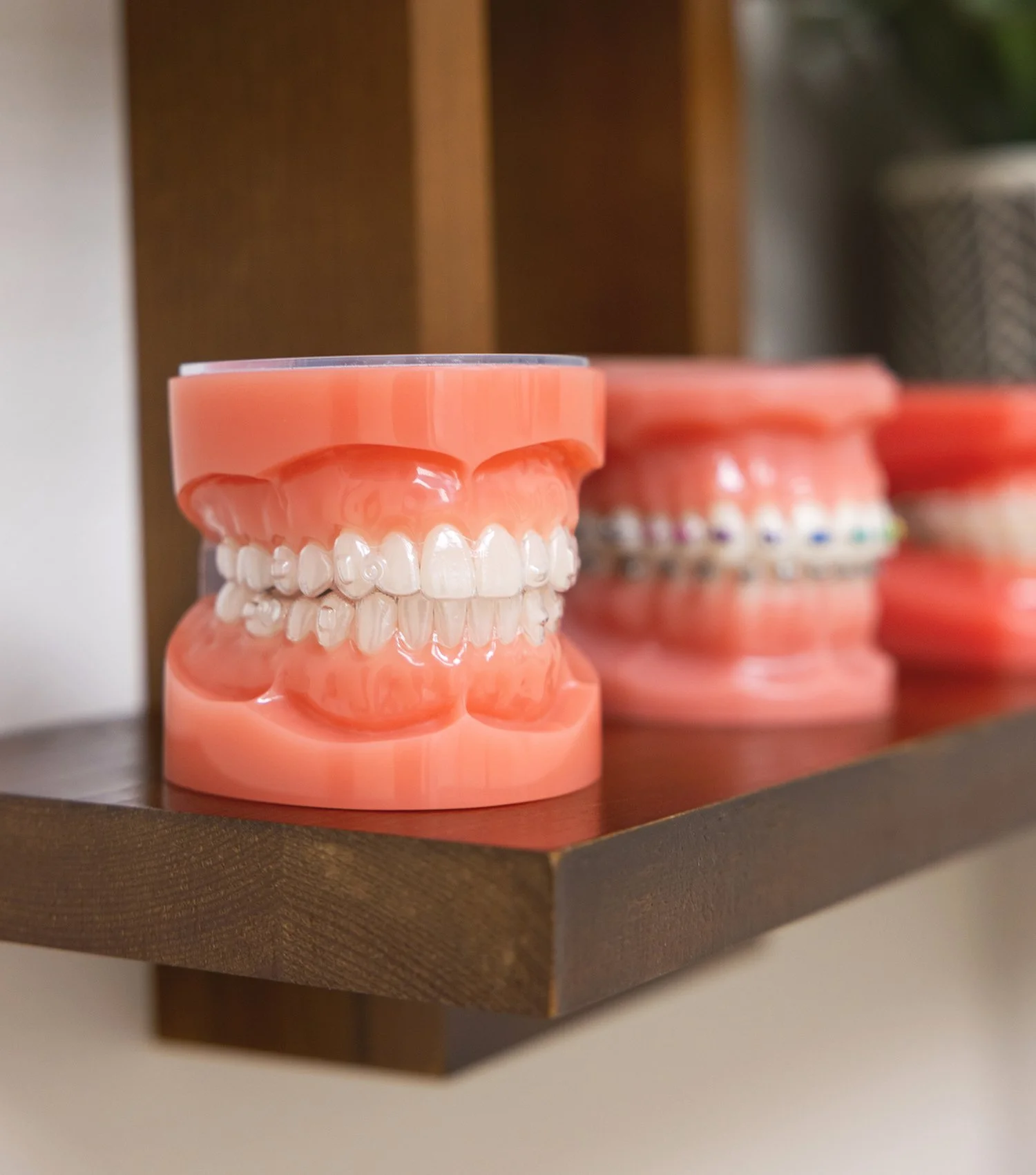
Braces vs Invisalign
Why Your Orthodontist May Recommend Braces
Your orthodontist may recommend braces instead of clear aligners like Invisalign® when your teeth require complex movement, your bite needs precise correction, or removable aligners may not be worn consistently. The right choice depends on your diagnosis, not simply which treatment you prefer.
When comparing braces vs. Invisalign, or any clear aligner system, remember that neither option is automatically better for everyone. An orthodontist evaluates your teeth, bite, jaw relationships, oral health, lifestyle, and treatment goals before recommending the most appropriate approach. At Sander Orthodontic Arts, our clear aligner system is Angel Aligners, a comparable custom-made aligner option that we use to treat many of the same concerns.
How Do Braces and Invisalign Work?
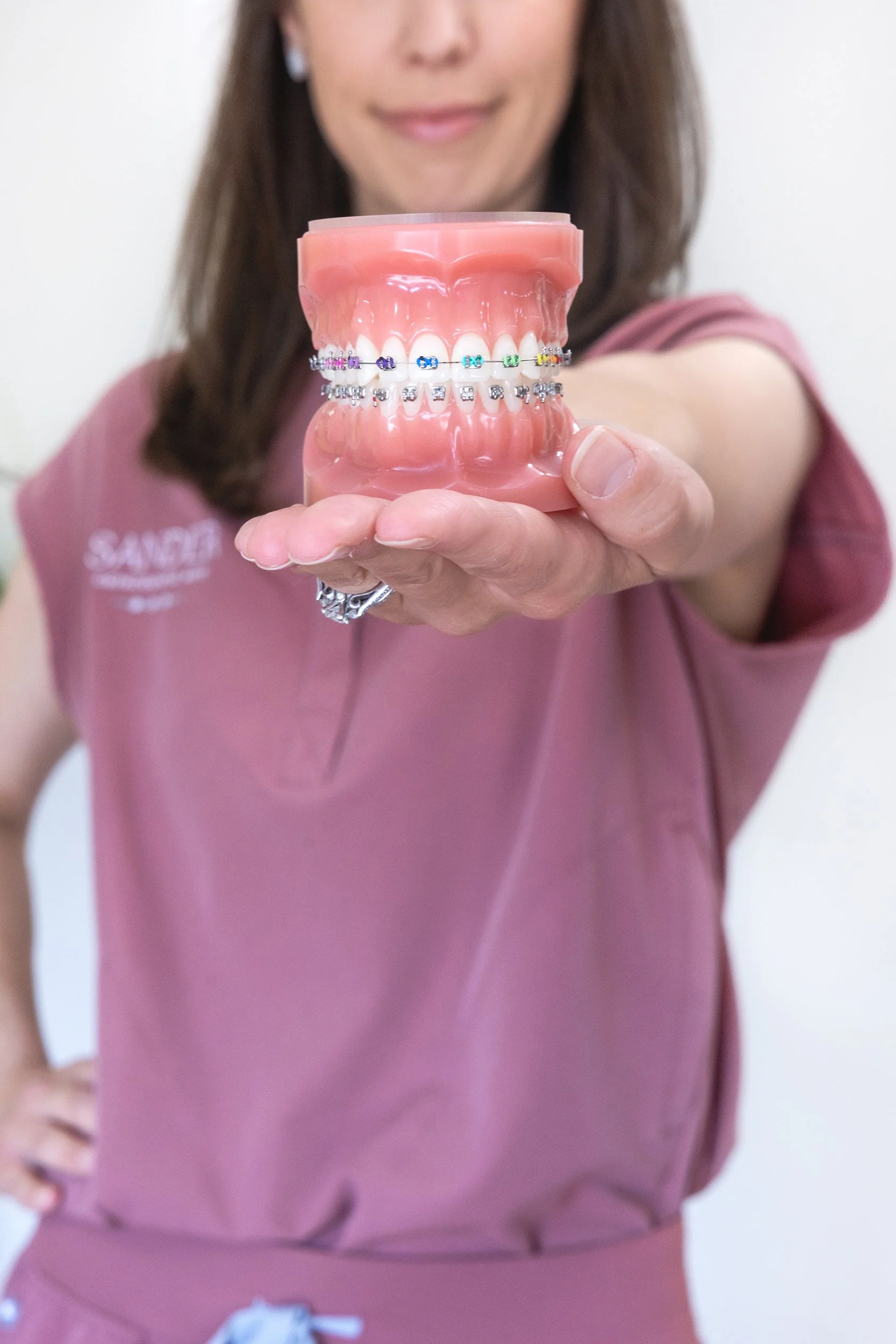
Braces use brackets bonded to the teeth and an archwire that applies continuous, controlled pressure. Because braces remain attached throughout treatment, they do not depend on the patient remembering to wear them.
Clear aligners, including well-known systems like Invisalign® and the Angel Aligners we offer here, use a customized series of removable, clear trays. Each aligner applies gentle pressure to guide planned tooth movements. Aligners must be worn according to the orthodontist's instructions and removed for eating, drinking anything other than water, brushing, and flossing.
Both are established orthodontic treatment approaches. The best appliance is the one that can produce a healthy, stable result for your specific condition.Why Braces Instead of Invisalign?
Braces may provide more predictable control for certain tooth movements or complex bite problems. Depending on the diagnosis, an orthodontist may recommend braces for:
Significant crowding or spacing
Severely rotated or tipped teeth
Impacted or unerupted teeth
Complex overbites, underbites, or crossbites
Teeth requiring substantial vertical movement
Cases needing detailed control of tooth roots
Patients unlikely to wear aligners consistently
These are general considerations, not universal rules. Clear-aligner treatment continues to evolve, and experienced orthodontists can treat many complex cases with Invisalign. In some situations, braces, aligners, or a combination of appliances may all be reasonable possibilities.
If you are asking, “Why can’t I get Invisalign?” ask your orthodontist to show you the findings that shaped the recommendation. Photographs, X-rays, and digital scans can help explain which movements are required and why one method may be more predictable.
Why Braces Instead of Clear Aligners?
Braces may provide more predictable control for certain tooth movements or complex bite problems. Depending on the diagnosis, an orthodontist may recommend braces for:
Significant crowding or spacing
Severely rotated or tipped teeth
Impacted or unerupted teeth
Complex overbites, underbites, or crossbites
Teeth requiring substantial vertical movement
Cases needing detailed control of tooth roots
Patients unlikely to wear aligners consistently
These are general considerations, not universal rules. Clear-aligner treatment continues to evolve, and experienced orthodontists can treat many complex cases with systems like Angel Aligners. In some situations, braces, aligners, or a combination of appliances may all be reasonable possibilities.
If you are asking, "Why can't I get Invisalign?" — it helps to know that Invisalign is one specific clear aligner brand among several. At Sander Orthodontic Arts, we offer Angel Aligners rather than Invisalign, and the same evaluation applies: ask your orthodontist to show you the findings that shaped the recommendation. Photographs, X-rays, and digital scans can help explain which movements are required and why one method may be more predictable.
Who Is a Candidate for Clear Aligners?
Candidacy for clear aligners — whether Invisalign, Angel Aligners, or another system — depends on clinical needs and patient habits. Many teens and adults with crowding, spacing, or certain bite problems may qualify. Some more involved cases can also be treated with clear aligners when appropriately planned and monitored.
A suitable candidate is generally someone who:
Has healthy teeth and gums
Can wear aligners for the prescribed number of hours
Will remove them before eating or drinking
Can keep the aligners clean and avoid losing them
Will brush before putting the aligners back in
Can attend regular progress appointments
The American Association of Orthodontists notes that clear aligners are not appropriate for everyone and that some cases are treated more predictably with braces. Final candidacy requires an examination by a qualified dental professional.Ceramic Braces vs Invisalign
Patients who want a less noticeable treatment may compare ceramic braces vs Invisalign. Ceramic braces use clear or tooth-colored brackets but function similarly to traditional fixed braces.
They may be an option for patients who want a more discreet appearance while still benefiting from a fixed appliance. However, ceramic braces remain visible at close range and require careful cleaning. They may not be appropriate for every patient or every tooth position.
Invisalign is removable and usually less noticeable, but successful treatment depends on responsible wear. Your orthodontist can explain whether ceramic braces, metal braces, or clear aligners best balance your clinical needs and preferences.
Ceramic Braces vs. Clear Aligners
Patients who want a less noticeable treatment often compare ceramic braces vs. Invisalign or other clear aligner options. Ceramic braces use clear or tooth-colored brackets but function similarly to traditional fixed braces.
They may be an option for patients who want a more discreet appearance while still benefiting from a fixed appliance. However, ceramic braces remain visible at close range and require careful cleaning. They may not be appropriate for every patient or every tooth position.
Clear aligners like Angel Aligners are removable and usually less noticeable, but successful treatment depends on responsible wear. Your orthodontist can explain whether ceramic braces, metal braces, or Angel Aligners best balance your clinical needs and preferences.
How Does an Orthodontist Choose the Best Treatment?
An orthodontic evaluation may include an examination, photographs, digital scans, and X-rays. These records reveal information that cannot always be seen in the mirror, including root positions, unerupted teeth, bone support, and jaw relationships.
The orthodontist may consider:
The type and severity of the bite problem
The direction and amount of movement each tooth needs
Oral health and dental history
Age and dental development
Lifestyle and ability to follow instructions
Expected advantages and limitations of each appliance
The likelihood of achieving a stable result
At Sander Orthodontic Arts, our Wichita orthodontic team uses these findings to develop an individualized treatment plan — with braces or our Angel Aligners clear aligner system, depending on what your smile needs. Contact us for more information.
Frequently Asked Questions
Are braces faster than clear aligners like Invisalign?
Not necessarily. Treatment time depends more on the diagnosis, treatment plan, and patient cooperation than on the appliance itself. Your orthodontist can provide an estimate after completing an examination.
Does Sander Orthodontic Arts offer Invisalign?
We offer Angel Aligners, a comparable custom clear aligner system to Invisalign. Angel Aligners use the same series-of-trays approach to gradually shift teeth and can address many of the same concerns, including crowding, spacing, and mild-to-moderate bite issues. Schedule a consultation to see whether braces or Angel Aligners best fit your smile.
Can Invisalign correct an overbite?
Invisalign is one clear aligner brand among several. At Sander Orthodontic Arts, we offer Angel Aligners, which may treat certain overbites depending on the cause and severity of the bite problem, the patient's growth, and the movements required — the same clinical factors that apply to any clear aligner system.
Who may not be a good candidate for clear aligners?
Patients requiring movements that may be less predictable with aligners, or those unable to wear and care for them consistently, may achieve a more reliable result with braces.
Can I choose clear aligners based on appearance alone?
Appearance can influence the decision when both treatments are clinically appropriate. If one option is expected to provide a safer or more predictable result, your orthodontist may recommend it over your initial preference.
Find the Right Treatment for Your Smile
The best orthodontic treatment is not determined by popularity or appearance. It is the option most likely to create a healthy bite and stable result while fitting your individual needs.
Not sure which side of the braces vs. clear aligners decision is right for you? Schedule a consultation with Dr. Sander. We will evaluate your teeth and bite, explain the appropriate options — including our Angel Aligners system — and help you understand why a particular treatment may be recommended.